You check your analytics every morning. The numbers look promising. Traffic is climbing steadily. Visitors are finding your business website through search engines and social media. But your phone stays silent. Your inbox remains empty. Your sales team has nothing to follow up on. This frustrating scenario plays out for thousands of business owners every single day. They invest heavily in driving traffic to their websites. They celebrate every uptick in visitor numbers. Yet their businesses see no actual growth from these efforts.
The harsh reality is this: website traffic without conversions is just a vanity metric. It looks good on paper but delivers zero business results. Understanding website optimization becomes critical when you realize that conversion rates matter infinitely more than visitor counts. This comprehensive guide reveals exactly why your website gets traffic but generates no leads. More importantly, it provides actionable solutions you can implement immediately to transform those visitors into paying customers.
Prefer listening over reading?
Play the audio conversation below and explore the discussion at your convenience.
Why Traffic Alone Doesn't Matter for Business Growth
Many business owners operate under a dangerous misconception. They believe more traffic automatically equals more business. This assumption costs them thousands in wasted marketing spend. Consider this real-world example. Company A receives 10,000 monthly visitors with a 0.5% conversion rate. They generate 50 leads per month. Company B receives only 2,000 monthly visitors but maintains a 5% conversion rate. They generate 100 leads monthly with one-fifth the traffic. Which business is winning? Obviously Company B. They understand that website optimization focuses on conversion, not just visitor counts.
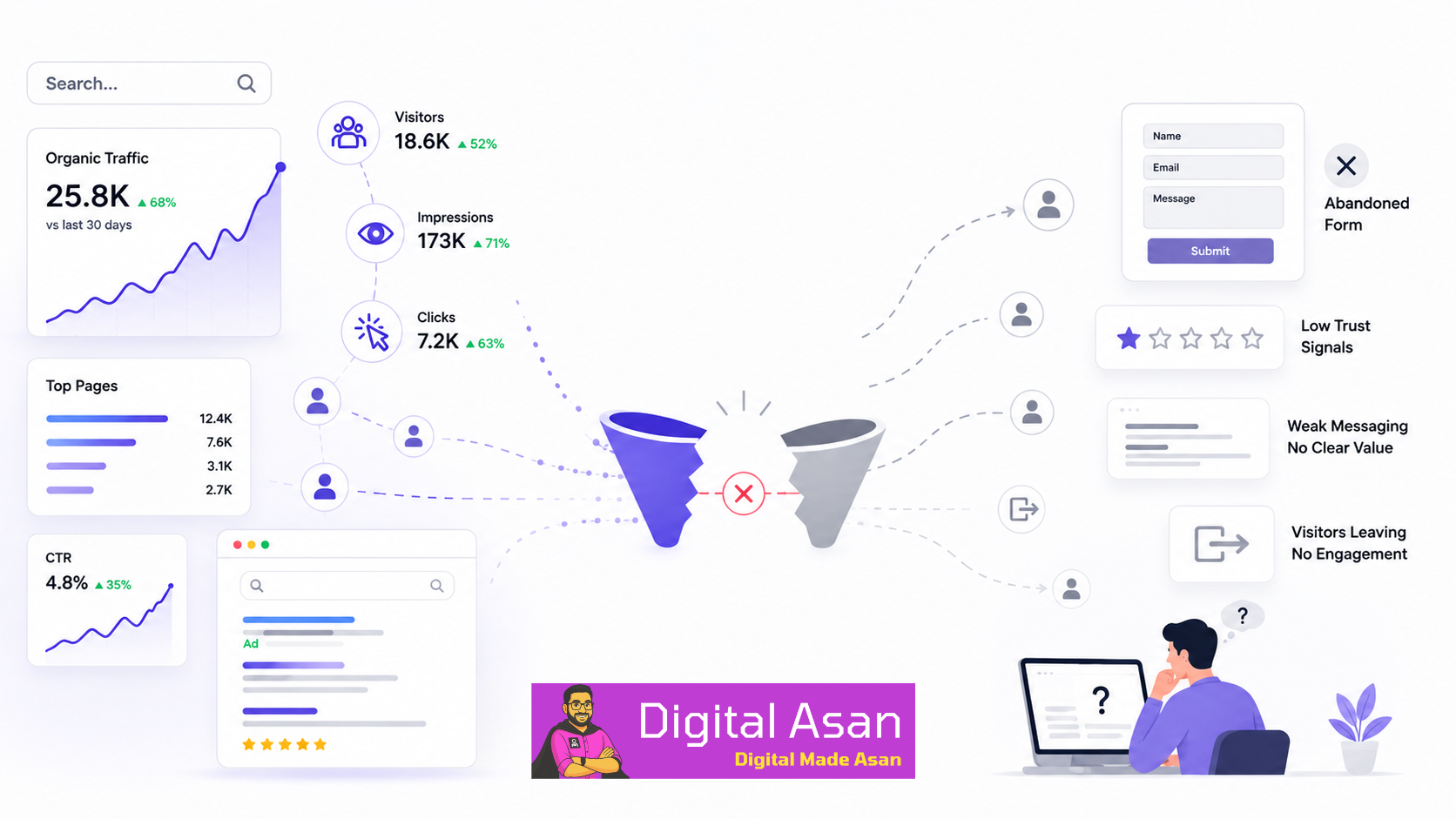
The Traffic Illusion That Drains Marketing Budgets
Search engines drive traffic to millions of websites daily. Google Search Console shows impressive visitor numbers. Google Analytics displays beautiful traffic graphs. But these metrics become meaningless without corresponding business outcomes. Your target audience arrives on your site with specific intentions. They have questions, problems, or needs. When your website fails to address these effectively, visitors leave immediately. High bounce rates signal fundamental website optimization problems. Think about your own browsing behavior. How often do you visit a website and leave within seconds because something felt wrong? The page loaded slowly. The design looked outdated. The information seemed irrelevant. You couldn't find what you needed.
Your potential customers make these same instant judgments about your business website. They arrive with intent but leave without action because your site fails to guide them properly.
What Actually Drives Business Results
Successful website optimization focuses on three critical elements that traffic numbers completely ignore. First, user experience determines whether visitors can easily navigate your site and find relevant information. Second, conversion pathways guide visitors toward taking specific desired actions. Third, value proposition clarity communicates why visitors should choose your business over competitors.
These elements work together to transform casual browsers into engaged prospects. Traffic merely represents opportunity. Conversion represents actual business value.
Traffic-Focused Metrics
These numbers look impressive but don't directly impact revenue
- Total page views
- Unique visitors count
- Session duration averages
- Pages per session
- Traffic source diversity
Conversion-Focused Metrics
These numbers directly correlate with business growth and revenue
- Lead generation rates
- Contact form submissions
- Phone call conversions
- Email signup percentages
- Quote request numbers
Make sure your website optimization efforts prioritize conversion metrics over traffic vanity numbers. Track what actually matters to your bottom line.
Wondering Why Your Traffic Isn't Converting?
Most businesses focus on the wrong metrics. Our conversion experts analyze exactly where your visitors drop off and why they're not taking action. Get a complete picture of your conversion gaps.
The Psychology Behind Visitor Behavior
Understanding why visitors leave without converting requires examining basic human psychology. Every website visitor asks themselves three immediate questions within the first few seconds.
- Can I trust this business?
- Will they solve my specific problem?
- What exactly do they want me to do next?
Your website must answer all three questions instantly and convincingly. This process happens subconsciously, faster than rational thought. Visitors form impressions before they even read your content. Professional website design matters because it signals credibility. Clear value propositions matter because they demonstrate relevance. Obvious call-to-action buttons matter because they eliminate confusion about next steps.
When any of these elements fail, visitors abandon your site. They return to Google search results and click on your competitor's link instead. The traffic you paid to acquire flows directly to businesses that better understand website conversion optimization principles.
Top 10 Website Optimization Mistakes Killing Your Conversions
Most website optimization failures stem from a handful of recurring mistakes. These errors appear across industries and business sizes. They're so common that spotting them becomes second nature once you know what to look for. Identifying these mistakes on your own site represents the first step toward meaningful improvement. Many business owners remain completely unaware of these conversion killers destroying their lead generation potential.
1. Prioritizing Aesthetics Over Conversion Strategy
Beautiful website design means nothing if it fails to convert visitors. Many businesses invest heavily in visual appeal while ignoring fundamental conversion principles. They choose artistic layouts that confuse visitors. They hide important information beneath layers of navigation. They prioritize brand expression over user needs.
Effective website optimization balances visual appeal with strategic conversion architecture. Every design element should serve a specific purpose in guiding visitors toward desired actions. If a visual element doesn't support conversion goals, it becomes unnecessary distraction. Ask yourself this question about every page element: Does this help visitors take the next step, or does it just look nice? Ruthlessly eliminate decorative elements that don't serve conversion purposes.
2. Creating Content Without Conversion Intent
Your website content should directly address what potential customers actually search for. Too many businesses create content they want to write rather than content their target audience needs to read. This disconnect between content creation and user intent kills conversions immediately.
Search engines reward content that satisfies user intent. Google Analytics reveals which pages attract traffic but fail to convert. These pages represent wasted opportunities because they answer the wrong questions or fail to guide visitors toward next steps. Website conversion optimization requires aligning every piece of content with specific conversion goals. Blog posts should lead to email signups. Service pages should encourage contact form submissions. Product descriptions should facilitate purchase decisions.
3. Ignoring Mobile User Experience Completely
Over 60% of website traffic now comes from mobile devices. Yet countless business websites remain optimized only for desktop viewing. Text becomes unreadable on small screens. Buttons prove impossible to tap accurately. Forms require endless scrolling and zooming.
Mobile visitors exhibit different behaviors than desktop users. They have less patience for complicated navigation. They demand instant access to key information. They abandon sites faster when faced with usability friction. Testing your website on actual mobile devices reveals painful truths. What looks perfect on your desktop monitor often becomes completely unusable on smartphones. Website performance optimization must prioritize mobile experience to capture these increasingly dominant traffic sources.
4. Burying Contact Information and Conversion Opportunities
Potential customers shouldn't need to hunt for ways to contact your business. Yet many websites hide phone numbers in footer text. They bury contact forms three clicks deep in navigation menus. They fail to display contact information on key service pages.
Every page on your business website should clearly present conversion opportunities. Make sure contact information appears prominently and consistently. Phone numbers should be clickable on mobile devices. Contact forms should require minimal fields and effort. The easier you make conversion, the more conversions you'll receive. This principle seems obvious but gets violated constantly across business websites.
5. Neglecting Page Speed and Technical Performance
Website speed optimization directly impacts conversion rates. Studies consistently show that every additional second of load time decreases conversions by approximately 7%. Slow websites frustrate visitors who expect instant results.
Modern internet users have zero patience for sluggish websites. They've grown accustomed to instant loading from major platforms. When your site takes more than three seconds to display, visitors assume something is broken and leave immediately. Tools like Google PageSpeed Insights reveal exactly what slows your website down. Common culprits include oversized images, excessive scripts, poor hosting infrastructure, and missing caching mechanisms. Addressing these technical issues dramatically improves both user experience and conversion rates.
6. Using Generic Copy That Fails to Differentiate
Your website content should explain exactly why customers should choose your business over competitors. Generic phrases like "quality service" or "customer satisfaction" mean absolutely nothing. Every competitor makes identical claims.
Effective website optimization requires specific value propositions that demonstrate unique advantages. What do you do differently? What results can customers expect? Why should they trust you specifically? Replace vague marketing speak with concrete details. Show rather than tell. Provide evidence instead of empty promises. This approach builds credibility and drives conversions.
7. Creating Complicated Navigation Structures
Website visitors should never feel confused about where to find information. Complex navigation menus with nested subcategories create unnecessary friction. Visitors shouldn't need to guess which category contains the information they seek.
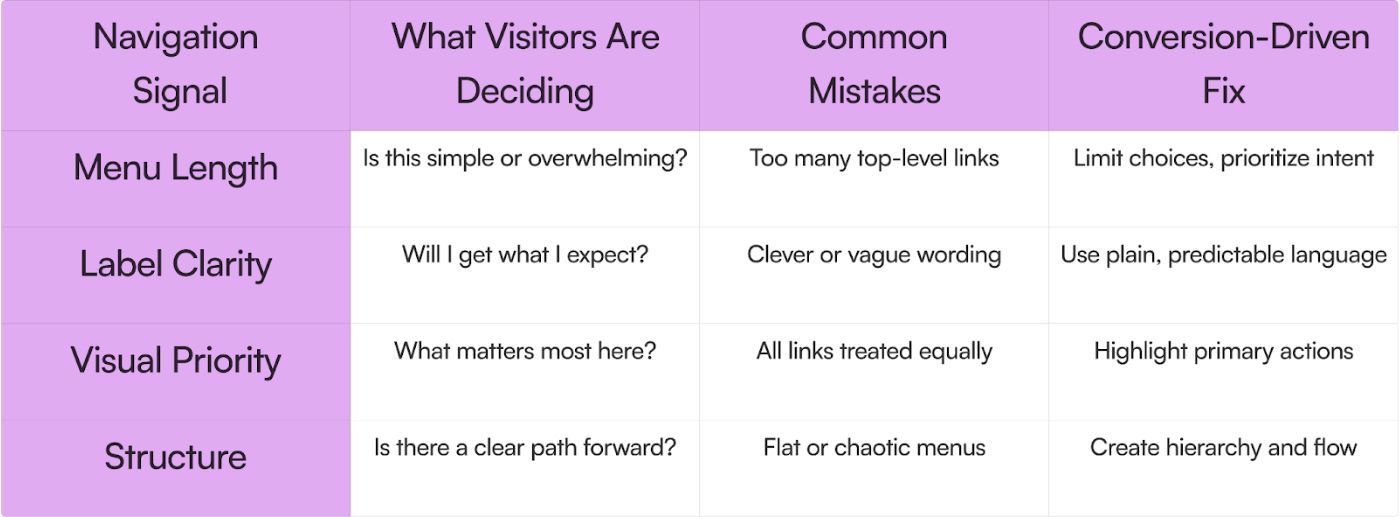
Simple navigation structures convert better than elaborate ones. Limit main navigation to five to seven primary options. Use clear, descriptive labels that match what users actually search for. Make sure your most important conversion pages remain easily accessible from anywhere on your site. Tools like Google Search Console reveal which pages users visit most frequently. Prioritize easy access to these popular destinations.
8. Failing to Establish Trust and Credibility
Online visitors naturally approach unfamiliar businesses with skepticism. They need reassurance before sharing contact information or making purchase decisions. Your website must proactively address this trust barrier.
Trust signals include customer testimonials with specific results, relevant certifications and credentials, professional design quality, transparent contact information, and clear privacy policies. These elements work together to overcome initial skepticism. Many businesses overlook trust-building because they assume their legitimacy is obvious. But potential customers know nothing about your business initially. You must earn their trust through deliberate credibility signals.
9. Optimizing for Search Engines While Ignoring Humans
Some businesses become so focused on search engine optimization that they forget about actual human visitors. They stuff keywords awkwardly into content. They optimize technical elements while creating terrible user experiences. They rank well but convert poorly.
Modern search engines increasingly prioritize user experience signals. Google's algorithms reward websites that satisfy visitor intent and provide positive experiences. The distinction between SEO and website optimization has largely disappeared because search engines now measure user satisfaction. Best practices involve creating genuinely helpful content for your target audience first, then applying technical optimization second. This approach satisfies both search engines and human visitors simultaneously.
10. Missing Clear Next-Step Guidance
Every page on your website should guide visitors toward a specific next action. When you leave visitors wondering what to do next, they simply leave. Your job involves making the conversion path obvious and effortless.
Use clear calls-to-action that tell visitors exactly what action to take and what happens when they take it. "Get Your Free Quote" works better than "Learn More" because it sets specific expectations. Remove ambiguity from the conversion process. Strategic CTA placement throughout your website content keeps visitors moving forward. Don't wait until the end of pages to present conversion opportunities. Place relevant calls-to-action wherever visitor intent aligns with conversion readiness.
- Slow loading speeds exceeding three seconds
- Hidden or buried contact information
- Complicated navigation requiring multiple clicks
- Generic content with no differentiation
- Poor mobile responsiveness and usability
- Lack of trust signals and credibility markers
- Vague or missing calls-to-action
- Confusing value propositions
- Technical errors and broken functionality
- Outdated design signaling neglect
What Kills Conversions
- Fast loading under two seconds across all devices
- Prominent contact options on every page
- Intuitive navigation with clear hierarchies
- Specific value propositions demonstrating uniqueness
- Seamless mobile experience matching desktop quality
- Multiple trust signals including testimonials and credentials
- Clear action-oriented CTAs with obvious next steps
- Compelling messaging addressing customer pain points
- Flawless technical performance and functionality
- Modern professional design inspiring confidence
What Drives Conversions
Which of These Mistakes Are Killing Your Conversions?
Our website optimization experts conduct comprehensive manual audits identifying exactly which conversion killers affect your specific site. Get a detailed analysis of every element preventing leads, plus prioritized recommendations for maximum impact improvements.
Common Questions About Website Optimization
How long does website optimization take to show results?
Most businesses see measurable improvement within 30 days of implementing core optimizations. Speed improvements deliver immediate benefits. CTA and conversion pathway optimization typically shows results within 2-4 weeks as traffic flows through improved elements. Comprehensive optimization continues delivering increasing returns over 3-6 months as various improvements compound.
Do I need to rebuild my website completely?
Most websites don't require complete rebuilds. Strategic optimization of existing elements delivers superior results at fraction of rebuild costs. Complete rebuilds make sense only when fundamental architecture problems prevent optimization or when technology has become severely outdated. Our audits determine whether optimization or rebuild better serves your situation.
What's the difference between SEO and website optimization?
SEO focuses on attracting traffic through improved search visibility. Website optimization focuses on converting that traffic into leads and customers. Both disciplines work together - SEO fills the top of your funnel while optimization ensures visitors flowing through actually convert. Successful websites require both approaches working in concert.
How much does professional website optimization cost?
Investment varies based on website complexity and current condition. Basic optimization addressing speed, mobile experience, and primary CTAs typically ranges $3,000-$8,000. Comprehensive optimization including content revision, advanced conversion optimization, and ongoing improvement ranges $8,000-$15,000. Most businesses see 3-10x ROI within first six months through increased lead generation.
Can I do website optimization myself?
Yes, particularly if you have technical capabilities or development resources. The checklist provided in this guide offers specific actions you can implement. However, most business owners find that specialists deliver faster results and avoid costly mistakes. Consider professional help for technical optimization while handling content and messaging improvements internally.
How do I measure website optimization success?
Track conversion-focused metrics including lead generation rate, form submission numbers, phone call conversions, and revenue per visitor. Also monitor user experience metrics like bounce rate, time on page, and pages per session. Use Google Analytics to set up goal tracking and conversion funnels. Compare month-over-month performance focusing on business outcomes rather than vanity metrics.